Havelberg horse market
Four days of festival, trade, fairground and tradition. And a whole town that changes its pace for it. Here you learn when the market really begins, where you park properly, what waits on the ground and why you should book a stay early.
For many the Havelberg horse market is the event of the year in the region. Some come for the animals and the trade, others for the fairground, others because they have known the date since childhood. This guide gathers the practical knowledge: from the unofficial Monday mood to the fireworks on Sunday, from car parks and the ferry to the question of when a bed in Havelberg is still free.
At a glance: what you need to know
- Official start: always the first Thursday in September
- Unofficial start: already on the Monday before (the day after the Bootskorso)
- End: Sunday evening with fireworks
- Entry: free. Traders and exhibitors pay a pitch fee
- Visitors: around 200,000, largest crowd on Saturday
- Character: largest folk festival in the region: horse and animal trade, jumble, fairground, party
When does the horse market really begin?
Officially the mayor opens the Havelberg horse market on the first Thursday in September. Then the market master takes over. Since 2024 that is Jenny Wolff, who works in the town hall. Before her a market master held the post for around 25 years.
Unofficially the festival week begins earlier. On Monday, one day after the Bootskorso, the jumble traders set up on the small-trade ground. Insiders and many people from Havelberg already use the afternoon for the first rounds. Who likes the quieter, more local mood comes then.
The animals (it is not only horses that are traded) may arrive only from Tuesday, for a good reason: so that deliveries do not wait unnecessarily long. The actual trade picks up in the days that follow and is largely through by the weekend. Saturday remains the busiest day for visitors all the same.
What do you experience at the horse market?
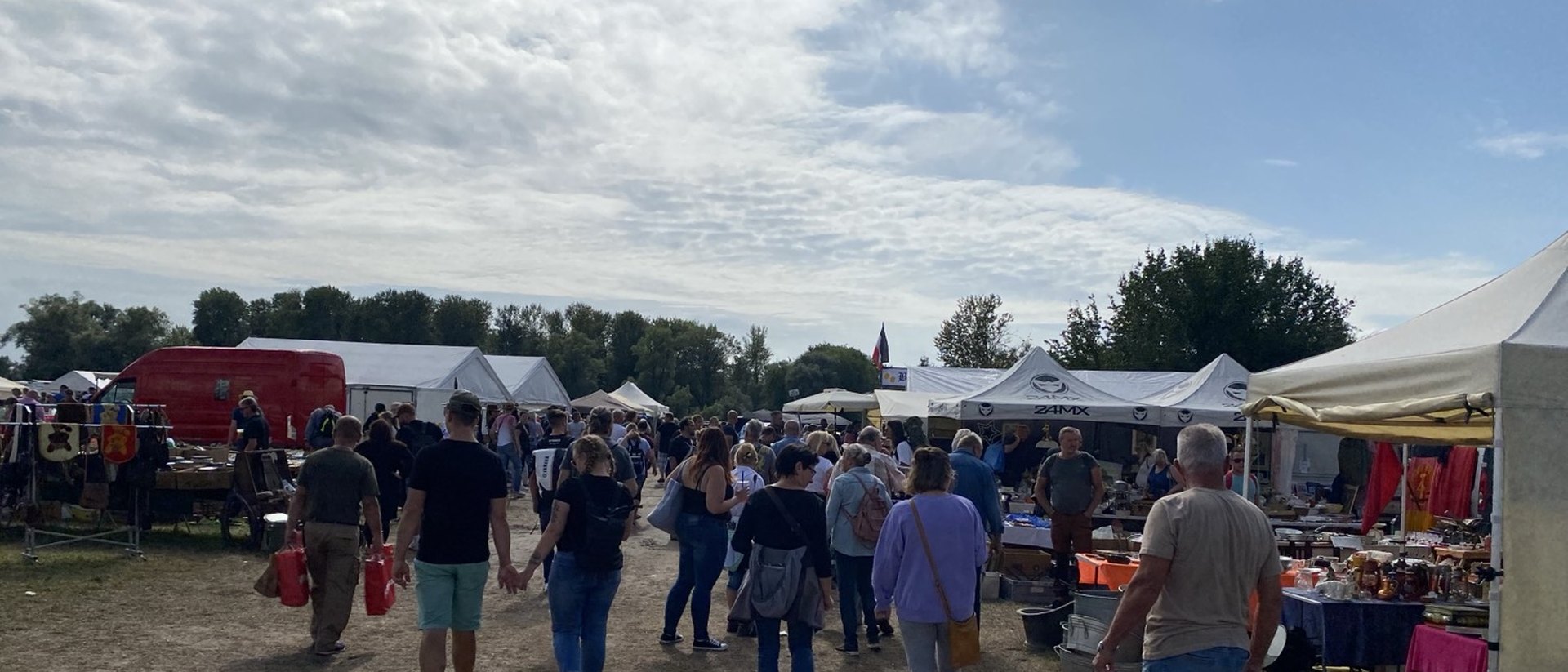
The name sometimes misleads. Yes, horse and animal trade is the historic heart. Each year hundreds of animals change hands with a handshake. But the Havelberg horse market has long been more: a large folk festival with a jumble and trade mile, showmen, rides, food stalls, festival tents, disco and party. Who only expects to “look at horses” misses half. Who only looks for the fairground misses the other half.
That mix is the point. In the morning you can stroll the trade grounds, at midday eat at a stall, in the afternoon take the fairground and in the evening move into a tent or to a party. Many guests stay several days, because one afternoon is simply not enough.
„This horse market is in its way almost unique. In Germany I would say, in its variety you have to live it: the horse trade, the fairground, the small trade with the many traders who offer old goods. The sport event, the cultural event. It is something wonderful, something unique.“
Bernd Poloski, Mayor of Havelberg 1990-2022
Trade and jumble
On the trade grounds it runs from sunrise to sunset. You find everything from classic market goods through curiosities to classic jumble. Pitch contracts with the town hall are often signed months ahead. For many traders the market is a fixed date in the year.
For latecomers there are still chances: smaller traders can ask the market office on the ground whether a pitch is still free. That is a real tip if you have a few days and something to sell. Large, fixed plots go early; at the edge or at short notice something is occasionally still possible.


Horses and animals
The name is not an accident. Horse and animal trade is the historic foundation. Here you see the animals close up, families stroke the horses, and deals are often still sealed with a handshake. Arrival of the animals is set from Tuesday, so unnecessary waiting is avoided.


Horse shows
Of course riding shows belong to a horse market. „Die Comanchen“ from Neu Poserin come to Havelberg with their horses. Karina Vandersee and her team perform from Thursday to Sunday at various times.
One number is called Feuerpferd. In it you see Cazurro, not a competition, more theatre on horseback under light. The fire show is the highlight on Saturday evening, once it is dark. The film shows the first part from 2026:
Film: Feuerpferd with Cazurro on YouTube. Playing it sends data to YouTube (Google).
Fairground, rides and evening programme
The showmen’s ground brings carousels, rides and the typical fairground light into town. By day it is family, in the evening louder and brighter. Festival tents, music, disco and party belong to it. The horse market is not only an afternoon trip for anyone who wants to stay into the night.
On Sunday evening the fireworks set the official close. Many stay until the last day exactly for that, even if the trade has already grown quieter.


Food all week
From Monday to Sunday many food stalls stand. For some Havelberg families the kitchen at home stays cold in the festival week: they eat „on the market“. Whether sausage, fish, sweet things or tent classics: you do not have to search long. During the week the choice is already there, at the weekend it gets fuller and the queues longer.
If you are out with children or simply want to eat in peace, late morning or early afternoon is often kinder than the rush on Saturday evening.


History and tradition
The Havelberg horse market looks back on a documented tradition since 1750, with interruptions, but a clear line. In the 18th century it counted among the large livestock markets of the region. Because there were hardly comparable horse markets further afield, the weight later sat clearly on horse trade. The name stayed, even when the festival had long covered more than the sale of horses.
For a time it was also called the „Großer Markt“. And generations ago the „Heiratsmarkt“: people from the surrounding villages came not only to trade, but to see and be seen. In a time without the internet and dating apps the market was one of the places where you could meet a future partner. Some families dressed daughters especially and brought them to present. The handshake as the close of a deal still belongs to the culture of this market: a bond without much paper.
The site has moved with the crowds. Earlier the market sat tighter in the town, among other places in the Lehmkuhle. Because of the huge press it wandered onto the large festival ground on Elbstraße (today Mühlenholz / festival ground), where it still takes place.
In the GDR years the horse market was known across the country. Here you could buy or swap things that were scarce in real existing socialism. Older people in Havelberg still tell of that: the market as a small „island“ of trade with its own rhythm.
The market takes place in almost any weather. Only in extreme high water, when the Elbe puts the land under, does it fall. That last happened in 2013: the town cancelled the official horse market because of flood damage in the region. There was then only a small private initiative.
Today it is the largest folk festival in the region: trade, showmen, family outing and party sit close together. In the Prignitz-Museum at the cathedral you find objects and a look into the town and market history. The cathedral and the island town sit close anyway. A walk there pays off if you want a short escape from the noise.
How the week runs
The horse market is not a one-day event with one start time for everything. It has a clear official frame and an unofficial run-up that locals know.
Monday and Tuesday: set-up and first rounds
Monday: the jumble traders set up on the small-trade ground. Insiders and locals already make their first rounds in the afternoon, often with an eye for stalls that disappear in the weekend crush. Tuesday: the animals may arrive. That rule prevents long waits for deliveries and gives the trade ground an ordered start.
Who wants the market without the full weekend crush is well placed during the week. Parking is calmer, the paths are freer, and talks at the stalls are easier.
Wednesday: the day of animal trade
On Wednesday most of the animal trade runs. Here more than 1,000 animals change hands, by handshake, as tradition has it. The fences and caravans of the traders are up, people grill, talk and celebrate. Many stay longer than only for the deal. Who wants the actual core of the horse market is right on this day.
Thursday: official opening
The mayor opens the market, the market master takes over. Since 2024 that is Jenny Wolff; before that the post sat with a market master for around 25 years. Traditionally tapping the beer barrel belongs to the opening. From here the festival is official, and the mood rises clearly toward the weekend.
A sense of the speech and the mood is in this cut of the 2025 opening with Mayor Matthias Bölt and market master Jenny Wolff (channel Havelberg Geheimtipp):
Film: Havelberg Geheimtipp on YouTube. Playing it sends data to YouTube (Google).
Friday and Saturday: full run
Friday draws a clearly larger crowd. Saturday is the day with the largest press of visitors. The animal trade is then usually largely through; many traders stay all the same, because the market for them is also family time and camping. For you as a guest that means: on Saturday you live the folk festival at full volume, not necessarily the quiet look at the last handshake.
On Saturday plan more time for the drive, parking and walking. Shuttles and extra parking (for example in Rathenower Straße) exist exactly for that.
Sunday: wind-down and fireworks
Sunday grows shorter and quieter. Some stalls pack earlier, the crowd thins, and who has stayed enjoys the last day without Saturday pressure. Late in the evening the fireworks end the festival week. After that the ground empties, and Havelberg returns to ordinary days, often only in the night and on Monday morning.


Getting there and parking
Most guests come by car. That is no accident: the region is rural, and who travels from further away needs flexibility for the drive, the way back and often for bags or family. Large fields are opened as paid car parks. Overnight stays with a camper or tent are tolerated for historic reasons: a piece of lived market tradition, not a built camping ground with showers and power for everyone.
At the weekend it pays to set the parking plan beforehand. Who drives into town without a plan quickly stands in queues or searches too long for a free strip.
Parking from the west / Sandau (B107)
The largest car park sits west of the B107: when you drive from Sandau toward Havelberg, you turn left still before Havelberg. From there you reach the festival well. For many coming from the west or south that is the logical first choice.
Parking from the north (especially at the weekend)
Who comes from the north finds at the weekend a large car park at the first roundabout. For a small fee a shuttle takes you straight to the main entrance of the horse market, useful if you want to save the walk or not carry children and bags across every path.
Parking from the east (Saturday)
On Saturday there is an extra car park in Rathenower Straße, also with a bus transfer. Useful when the west and north grounds are full or you arrive from the east and do not want to cut through the traffic.
From the west via Räbel and the ferry
One of the nicest variants: you park on the meadow in Räbel and walk over the ferry, about 20 minutes of easy walking. At peak time no vehicles are taken on the ferry because of the press. That is exactly why the walk is pleasant and safe. Who wants to join a short walk and a look at the Havel to the market visit is right here.
Shuttle bus in town (weekend)
At the weekend a shuttle bus runs through Havelberg and takes you for a small fare from several stops in town to the festival ground. Typical stops include Bahnhofstraße, the water tower, Uferstraße and Parkplatz Nord. Altogether around eleven stops are there, so the press from the car parks and from town is moved on quickly. Timetables and fares are published by the town or the transport association before each market (often lines 900/911/913 with a special timetable).
From the car park at Haus der Flüsse the buses also run to the ground, especially practical for people with limited mobility.
By bus and train
The bus line from Stendal main station via Havelberg to Glöwen station runs as usual. For anyone without a car that is the simple link to long-distance trains. Timetables can change. Check the times shortly before travel, especially on the festival days.
A short look at the parking grounds is in this film (Havelberg Geheimtipp):
Film: YouTube. Playing it sends data to YouTube (Google).
Finding your way on the ground, the map
The layout of the grounds has been stable for years. The overview map shows the main areas:
- 1 Horse-trade ground
- 2 Showmen’s ground
- 3a Trade ground
- 3b Small-trade ground
- 3c Jumble market

Download the map as PDF
A place to stay in Havelberg for the horse market
Who wants to sleep in a fixed stay in Havelberg should book a long way ahead. For the horse market every bed in town is taken: hotels, guesthouses, holiday flats, studios. That is not a sales line, it is the experience of every year. Who only looks in the week before often lands outside or pays more for a compromise.
Campers and tents on the parking grounds are an option and part of market tradition. They do not replace a quiet room with a shower if you travel with children, want to sleep early or want to start the next market day rested. Both have their place: flexible camping and a fixed bed in town.
Location matters. Central or near town saves you the long way back to the car in the evening. Who wants to sleep more quietly looks at stays a little off the loudest axes and plans the walk or the shuttle.
An overview of hotels, guesthouses, holiday flats and studios sits here:
From 2027 our own apartments on the island town will join. More under our apartments.
Tips for your visit
A few things that make the difference between „quite nice“ and well organised:
- Come during the week if you want trade and jumble without the Saturday crush.
- Plan Saturday if you want the full folk-festival energy, and allow more time for the drive and parking.
- Firm shoes: meadow, paths, a lot of standing and walking.
- Agree a meeting point: with around 200,000 people a fixed point helps more than „see you at the carousel“.
- With children: fairground and food stalls are a festival. Plan pauses and an earlier close.
- Räbel ferry: the variant for anyone who likes the walk and a short break from car traffic.
- Allow for weather: September can be warm, windy or wet. A thin jacket and something against rain rarely hurt.
- Island town and cathedral: if you need a pause from the noise, cathedral and island sit close and are worth it.
Frequent questions about the Havelberg horse market
When is the Havelberg horse market?
Officially always on the first Thursday in September, through to Sunday. Unofficially the jumble set-up already starts on the Monday before, the day after the Bootskorso.
Is entry free?
Yes. Entry to the festival ground is free. Traders and exhibitors pay a pitch fee to the town.
Are only horses traded?
No. The name comes from the historic weight of horse trade, but other animals are traded too. Arrival of the animals is set from Tuesday.
When is it busiest?
On Saturday. The animal trade is then often already largely through, yet the crowd of visitors is largest.
Where should I park?
Coming from Sandau on the B107, still before Havelberg turn left (large car park). From the north at the weekend at the first roundabout, often with a shuttle. On Saturday extra in Rathenower Straße with a transfer. From the west: meadow in Räbel and on foot over the ferry.
May I sleep on the car park?
Overnight stays with a camper or tent are tolerated for historic reasons. It is not a fitted camping-ground infrastructure. Plan accordingly.
Is there an arrival by bus or train?
Yes. The bus line from Stendal main station via Havelberg to Glöwen station runs as usual.
How do I get from Räbel to the market?
You park in Räbel and walk over the ferry, about 20 minutes. At peak time no vehicles run on the ferry, so the walk stays quiet and safe.
Who organises the market?
The Hanseatic town of Havelberg. Officially the mayor opens, the market master (since 2024 Jenny Wolff) runs the day. Contracts with traders run through the town hall, often months ahead.
Can I get a stall at short notice?
Larger pitches are given early. For smaller traders it pays to ask the market office on the ground. At short notice something is sometimes still possible.
When should I book a stay?
As early as possible. For the horse market every fixed bed in Havelberg is taken. Who absolutely wants to sleep in town plans in months, not in days.
Are there fireworks?
Yes. The official close is the fireworks late on Sunday evening.
Is the market suitable for children?
Yes. Fairground, rides and food stalls are a classic folk-festival day. Saturday is fuller and louder, during the week often calmer.
What has the Bootskorso to do with the horse market?
In time they hang together: the unofficial market start on Monday is the day after the Bootskorso. Many guests join both into a Havelberg week.
Which day is worth it for whom?
For traders and jumble hunters
Monday to Thursday are often the better days: set-up, first choice, less crush. On Wednesday the animal trade is especially intense. Who wants to sell clears the pitch question early with the town hall or asks the market office on the ground about short-notice options.
For families with children
Fairground and food stalls work on all days. During the week there is less going on, on Saturday the most. A fixed meeting point, pauses and a realistic goodbye to the last carousel make the day calmer.
For party and evening programme
Friday and Saturday are the clear favourites. The riding shows often sit after 8 pm. Who stays for the fireworks plans Sunday in and looks after the way back to the car park or the stay in good time.
For anyone who wants Havelberg as well
Join the market with the island town, the cathedral and a quieter evening in a stay in town. The Bootskorso immediately before easily turns the date into a whole Havelberg week.
In short
The Havelberg horse market is not an event you „just take along“. It is a week of its own in the year of the town: trade and handshake, jumble and fairground, families on the car park and party into the night. If you have the official opening on the first Thursday in September in the calendar, keep the Monday before in mind and settle your stay early, the visit stays with you.
If you want to join the market with water and the island town, a look at our page on Havelberg helps.
Notes on dates and the run of the days follow the established practice of the Hanseatic town of Havelberg. Changes by the market office are possible. Official information and contact: Hansestadt Havelberg, Markt 1, 39539 Havelberg.